
Product-Level Documentation
When a documented catalog purity value exists, the product record displays it. Missing analytical data remains explicit rather than being replaced with a generic purity claim.

The compounds in Transcendent Labs are for research by adults only.Confirm you are 18 or older to access.
Bio-Active Engineering © 2026
OUT OF STOCK GHK-Cu is a naturally occurring copper complex of the tripeptide glycyl-L-histidyl-L-lysine. It has a strong affinity for copper(II) and plays a crucial role in the r...
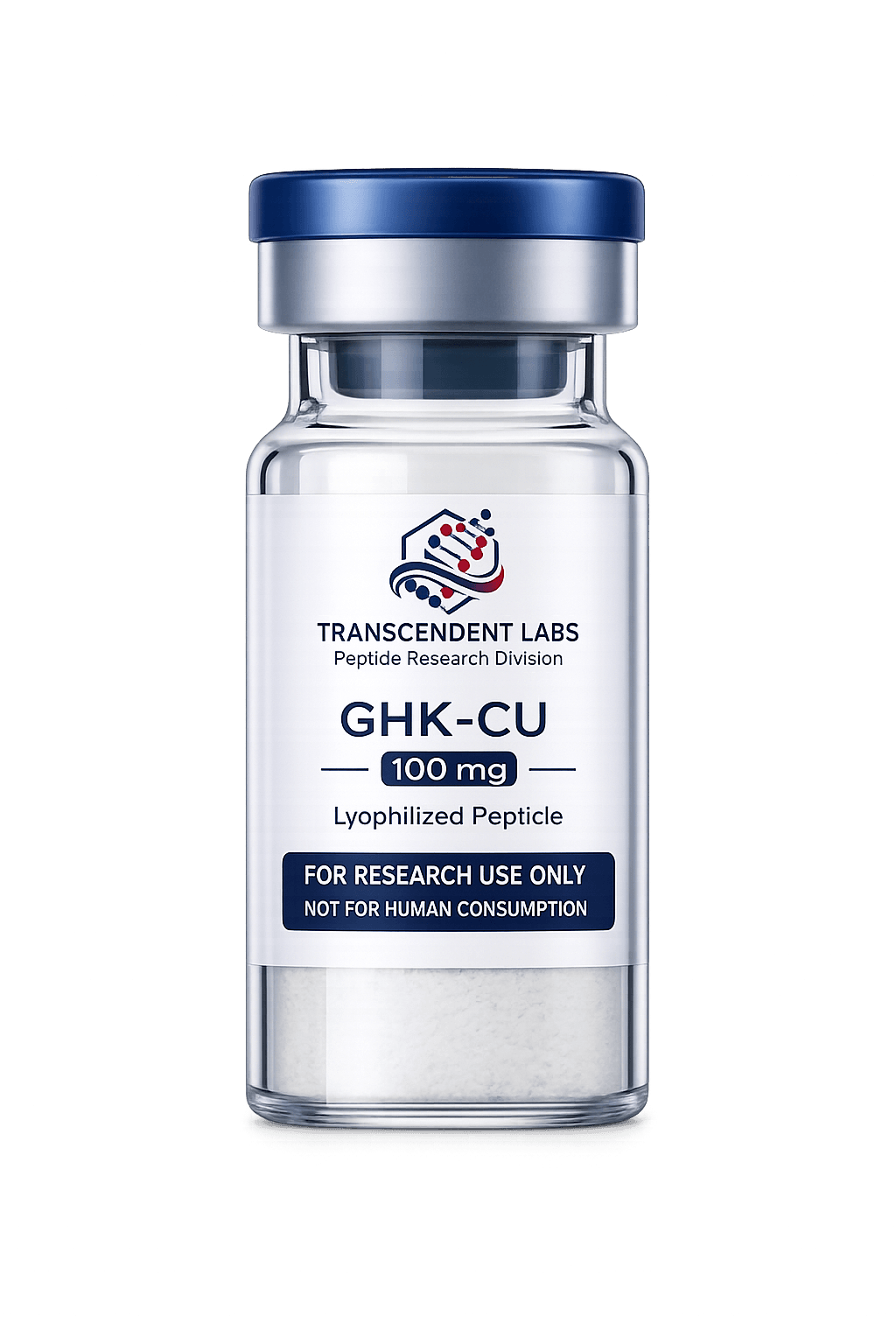
OUT OF STOCK GHK-Cu is a naturally occurring copper complex of the tripeptide glycyl-L-histidyl-L-lysine. It has a strong affinity for copper(II) and plays a crucial role in the remodeling of skin tissue. Research suggests it promotes glycosaminoglycan synthesis, stimulates collagen production, and possesses significant anti-inflammatory and antioxidant properties. **Molecular Formula:** C14H24N6O4Cu **Molecular Weight:** 403.94 g/mol **Sequence:** Gly-His-Lys-Cu **Appearance:** Blue lyophilized powder. **Storage:** Store at -20°C. Reconstitute with bacteriostatic water. **DISCLAIMER:** For laboratory research and development purposes only. Not intended for human consumption or diagnostic use.
Research & documentation
Separate commercial product information from analytical interpretation. Use the research profile, public COA records and method guides to evaluate what is actually documented for this material.
No verified lot-specific public record is linked to this product yet. We show that absence explicitly rather than substitute demo data.
Search COA LibraryUse the purity value and any batch-specific analytical documentation presented for the product as the primary reference. Where available, HPLC, mass spectrometry and Certificate of Analysis documentation provide additional batch context.
Transcendent Labs compounds are supplied strictly for laboratory research use only. They are not intended for human consumption, diagnosis, treatment or therapeutic use.
Inventory status is shown from the current product record. Availability can change as research batches are added, depleted or temporarily disabled in the catalog.
Researchers should follow the compound-specific storage conditions stated in the applicable product documentation or Certificate of Analysis. Batch documentation takes precedence over general handling guidance.
Research quality framework
When a documented catalog purity value exists, the product record displays it. Missing analytical data remains explicit rather than being replaced with a generic purity claim.
The site includes a batch verification workflow designed to connect research inventory with batch-specific documentation when that information is available.
Product positioning, checkout language and catalog documentation consistently identify Transcendent Labs compounds as laboratory research materials only.
Availability is driven by the current product inventory record, helping the public catalog reflect whether a research compound is presently in stock.